Repeat Daily Training | Continuously Surpass Yourself
Progress comes from effective training
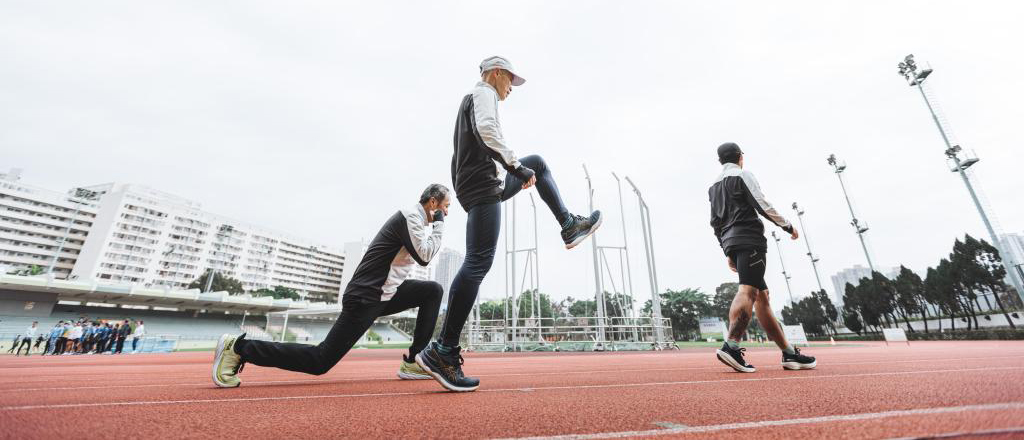
Only effective training can lead to continuous improvement, and effective training should have three key elements:
1. Improve running technique
In a long-distance race, there are at least a thousand steps, and sometimes even hundreds of thousands of steps. The impact of running posture on the race results is self-evident.
Only a very small number of people can detect subtle changes in their running posture and adjust muscle contraction amplitude and direction to achieve the most efficient running form. In elite sports, the difference between victory and defeat can be just a few millimeters. To pursue maximum progress within a limited athletic career, the careful observation and analysis of experienced coaches, along with targeted training, are essential.
Every step that wastes a little energy can cost several positions in a race.
2. Moderate intensity of the training schedule
Training intensity that is too high can lead to injuries, while training intensity that is too low can cause stagnation.
Training is both a science and an art. Coaches cannot rely solely on textbook knowledge to determine what training is best suited for an athlete. A good coach needs to combine their own rigorous training experience with years of nurturing athletes, along with communication and discussions with the athletes to understand their changing conditions. Only then can they arrange the appropriate training intensity.
3. Training teamwork
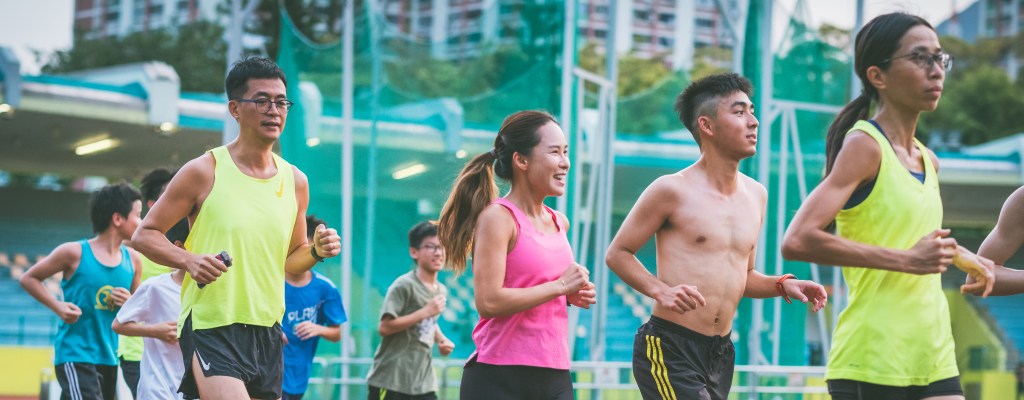
A single bamboo branch is easy to bend, but several branches are hard to break. Even someone as strong as former marathon world record holder Kipchoge believes that teamwork is crucial.
"Long-distance training will inevitably face difficulties, and everyone must work hard to overcome these challenges to taste the sweetness of victory in a race. You can face the tough training plan alone, but if someone is there to struggle alongside you, encouraging you to 'push through' when you want to give up, wouldn't that make the process much more effective?
Do you want to be a lone runner, or would you prefer to have a team that celebrates every victory with you after training and races?
1
Coach Wong focuses not just on the numbers on the timer, but on the mental state of each athlete. Every student has a unique personality and traits, and he needs to apply different training approaches based on each student’s abilities. Our running team spans ages from 3 to 60, and it's certainly not easy for the coach to cater to the diverse needs of each individual.
"Coach Wong travels between several sports fields every week, leaving early and returning late every day. When his students misbehave, he reprimands them sternly, but when they are unhappy, he comforts and encourages them. Despite the heavy workload, I have never seen Coach Wong complain or feel sorry for himself about the hardships of his work.
Woody Wu
Followed Coach Wong since 2012
Coach Wong has played an indispensable role in both my medical studies and long-distance running journey. She is my role model. She motivates and encourages me to give my best in both running and patient care. She listens carefully to my feedback and tailors my training plans according to my physical condition and work pressure. She values the health and mental state of athletes, providing effective feedback day after day. Coach Wong has helped me transform from a university student who enjoyed jogging with friends into a funded long-distance runner (though I still enjoy jogging with friends). I have been a competitive athlete since I was 5 years old, and in my 25-year sports career, Coach Wong is the most caring and knowledgeable coach I have ever encountered. She truly deserves the title of Best Coach.
David Walma
Followed Coach Wong since 2022
DPhil, Doctor of Medicine in Dentistry at University of Oxford, Undergraduate in University of Alabama at Birmingham
2
I am grateful that shortly after I started running, I began training with Coach Wong, and since then, I have gradually progressed from running 10K to marathons, 100 kilometers, and even longer distances.
"Coach Wong tailors her coaching to each individual. For someone like me, who often 'loses focus' during training, she always offers encouraging words. When I first met Coach Wong, I thought she was very strict, but once I opened up and sought her advice, she always provided valuable guidance to help me achieve my goals.
Nicole Lau
Followed Coach Wong since 2009
"Although Coach Wong has extensive experience and a deep understanding of long-distance running, she is the most willing coach to listen to her athletes that I have ever encountered. She adjusts the plan based on my emotional and physical condition, allowing me to do the most effective training at the right time. When it's time to train, I train; when it's time to rest, I rest. I’ve never felt like I’m just a machine following a plan, because Coach Wong always communicates with me in a respectful and empathetic way, helping me accept myself while pursuing breakthroughs.
Hanniel Chow
Followed Coach Wong since 2013
3
Coach Wong… a coach who is both a teacher and a friend. Not only has she helped me improve in running, but she also shares valuable life lessons. Whenever I face difficulties and seek her advice, I always receive detailed and useful answers. Recently, after recovering from an injury, I spent about five weeks preparing for a 360-kilometer overseas race. Thanks to Coach Wong's guidance, I was fortunate to successfully complete it.
Leo Chung
Followed Coach Wong since 2013
I remember when I first started training with Coach Wong during the early days of the pandemic, when sports fields and gyms were closed. But Coach Wong didn’t give up on us. Every Monday, Wednesday, and Friday morning, we trained by the Shing Mun River. Rain or shine, we started with the basics, focusing on perfecting our running form first, so we could run faster and farther.
I remember the most successful moment for me was during the Hong Kong 5K Championships in the pandemic period, which was also my first race after training with Coach Wong. The speed and pace in the race were different from those in trail races, and I felt very satisfied with the results of my training.
Ferdinand Tsang
Followed Coach Wong since 2020
Combining science and experience
Training is humanized. Everyone has different needs, so it cannot be determined solely by scientific principles. However, relying solely on experience can become subjective, inconsistent, and even lead to crude methods.
Therefore, training must combine both science and experience to achieve the best results.
More About Long Distance Running
The Shoe and the Runner (I)
Is there a secret to choosing the right long-distance training shoes? Some say thin-soled shoes are the best, and there are even those who practice barefoot running. Others prefer thick-soled shoes and believe adding a carbon plate to the training shoe enhances performance. Some athletes need extra style, feeling uncomfortable without wearing spikes for training. Is choosing the right long-distance training shoe really that difficult?
In fact, it's not that difficult. As long as you understand the capabilities of different types of shoes, choosing the right long-distance training shoes becomes quite straightforward.